- Home
A Single Destination for the Best Education
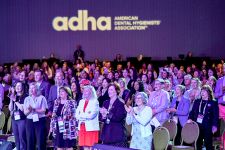
Immerse yourself in the ADHA26 education experience! Don’t miss this opportunity to connect with fellow dental hygienists and learn from some of the best in the industry. By coming together, we can work to advance professional development, improve patient care and discover the latest trends in dental hygiene.
Six education tracks! ADHA26 delivers education for every interest, practice setting and experience level in many ways. Everyone learns differently, so we’re offering sessions on a broad variety of topics in a mix of formats to fit your learning style, participation needs and the conference experience you want. Select from a blend of lectures, hands-on labs, instructor and vendor workshops, panel discussions and master classes to build your perfect education and conference itinerary and get the most out of your ADHA26 experience!
NEW THIS YEAR! Educational sessions no longer require advance sign-up or tickets. Arrive at your session and queue outside the room. Flossy VIP registrants have priority entry and reserved VIP seating. General seating is first come, first served.
ADHA26 Education Tracks
Clinical
Explore clinical strategies for disease prevention in dental hygiene, focusing on effective modalities and real-world examples of conditions successfully prevented. Sessions should highlight innovative models for both traditional practice and community-based care to advance preventive approaches.
Topics may include: Evidence-based approaches to disease prevention. Periodontal disease prevention and early intervention strategies. Models for traditional practice and community care.
Advocacy
Develop sessions that explore proactive legislative strategies to advance the dental hygiene profession and safeguard its scope of practice. Emphasize prevention-focused policies that strengthen the profession’s role in improving public health.
Topics may include: Proactive legislation to advance the profession. Protecting and expanding scope of practice through practice policy engagement. Direct access legislation, Medicaid reimbursement advocacy, workforce development policy.
Education
Create content that showcases innovative models for teaching primary prevention to dental hygiene students. Highlight approaches that integrate evidence-informed practices and prepare graduates for evolving clinical and community care settings.
Topics may include: Curriculum models for teaching primary prevention. How to collaborate with other health disciplines to teach prevention and holistic care. Measuring student competency in prevention-focused curricula. Teaching motivational interviewing and patient education techniques.
Research
Focus on studies that examine prevention as a cornerstone of oral health and its impact on overall well-being. Share findings, methodologies, and future directions for research aimed at improving population health.
Topics may include: Studies focusing on prevention and improving health of the public. Examples of studies include oral-systemic research, health disparities research, intervention outcome studies, and implementation science.
Public Health
Design sessions that demonstrate how prevention drives community care and reduces health disparities.
Topics may include: Advancing community care through prevention. Strategies for implementing preventive programs that expand access and promote equity in oral health. Social determinants of health, health equity initiatives, school-based prevention programs.
Hands-On Skill Building (Lab Only)
Provides healthcare professionals with practical, experiential learning opportunities to refine their prevention strategies for clinical practice. Fifty or more participants in each workshop will engage in guided practice sessions, receive personalized feedback, and gain confidence in applying advanced techniques in a clinical setting.
Topics may include: Ultrasonic debridement, Guided biofilm therapy, Biologics in periodontal care, Orthodontic procedures, Laser therapy, Botox injections, Airway dentistry
Learning Formats
We understand that adult learners have different study methods and education preferences. The content offered at ADHA’s Annual Conference attempts to meet the diverse learning needs of our conference attendees. The variety of learning formats supports a range of instructional methods giving attendees more control over setting their priorities and choosing the right content, materials and methods to match their learning styles, objectives and experience preferences.
Breakout Lectures: Choose Your Adventure (60 or 90 minutes)
Like standard didactic CE, lecture sessions instruct attendees through spoken presentations, slides and listening. We encourage presenters to develop sessions that engage attendees through dynamic interaction, either via small group activities during the lecture, polling or other collaborative learning exercises.
Hands-on Labs: Practice Makes Perfect (60 or 90 minutes)
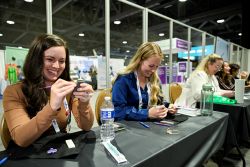
What’s better than hearing about a new product, method or practice? Actually using and applying new knowledge on the spot to build a stronger proficiency! Hands-on labs are in-depth workshops designed to get you utilizing equipment and practicing techniques that you can immediately apply upon returning to your daily routine.
Fireside Chats: Where Conversation Sparks Ideas (45 minutes)
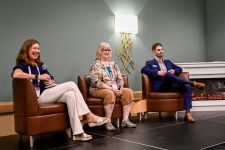
Pull up a seat and join the conversation in our intimate Fireside Chats. These 45-minute discussions bring together up to 50 attendees for an open exchange of ideas, insights, and solutions. Moderators and guest speakers set the stage with thought-provoking questions, but the magic happens when the audience jumps in—ask questions, share your perspective, and connect with peers and experts alike. It's the perfect setting to dive into the topics that matter most, build meaningful connections, and walk away with fresh perspectives. Come ready to share, learn, and spark new ideas in a relaxed, collaborative space.
Master Class (Half-Day or Full-Day)
Are you a trainer or a certifier of a technique or practice that dental hygienists need? (Examples might include CPR, advanced instrumentation, laser certification, orofacial myofunctional therapy, etc.) Apply to have your workshop considered for inclusion either before or during the conference programming.
Questions?
Contact the ADHA Education team at education@adha.net

.png)